
About the Study
A global investigation into what helps people flourish.
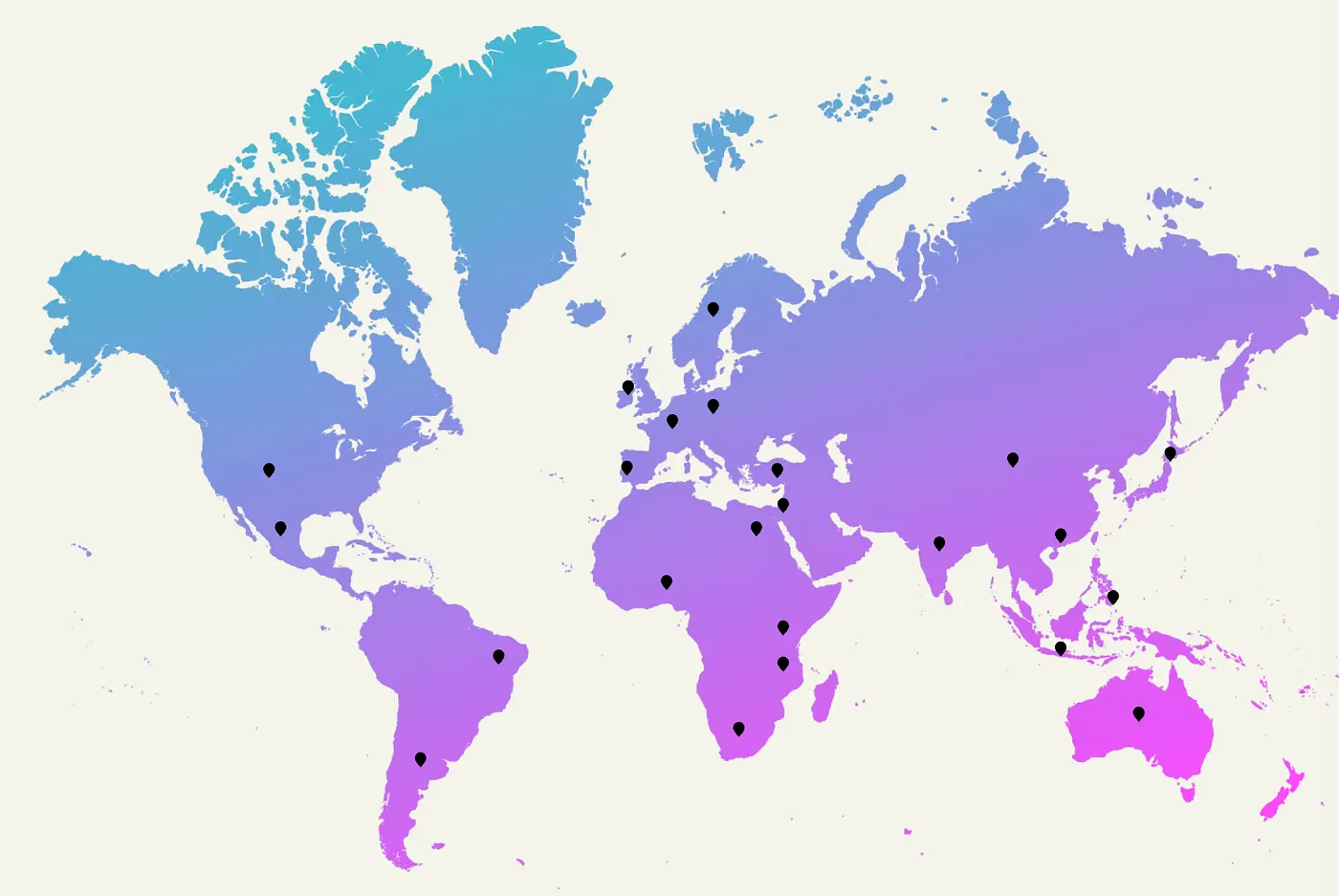
The Global Flourishing Study is a 22-country, longitudinal investigation of human flourishing, tracking more than 200,000 participants across every inhabited continent to understand the conditions under which people, communities, and cultures thrive.


What we're studying
Most large surveys measure a single slice of well-being: income, or health, or happiness. Flourishing is broader: a life going well across many dimensions at once. The Global Flourishing Study sets out to measure that fuller picture, and to ask why people flourish — tracing the childhood, demographic, and cultural roots that shape a life over time.
The study looks at flourishing through six core domains. Explore each below. Hover or tap a lens to see the questions we ask and the research it opens up.
Six domains of human flourishing

- 01How do different aspects of a child’s upbringing predict happiness in adulthood?
- 02How does life satisfaction / life evaluation vary across different demographic categories such as age, gender, marital status, employment, religious service attendance, education, and immigration status?
- 03How do different aspects of a child’s upbringing predict life satisfaction in adulthood?
How we measure flourishing
Secure Flourishing Index (SFI)
A composite measure of all six domains, including financial and material stability.
Flourishing Index (FI)
The first five domains alone, measured when financial security is held separate.
Contextual factors
Alongside the six domains, the study tracks the conditions that shape flourishing: religion, family environment, employment, health behaviors, civic engagement, and more.
How the study works
The Global Flourishing Study is longitudinal: rather than taking a single snapshot, it returns to the same participants in repeated annual waves. That matters empirically: because the same people are measured before and after, researchers can move beyond mere correlation toward much stronger, near-causal claims about what actually drives flourishing, rather than what simply moves alongside it. Data collection is carried out with Gallup, using nationally representative samples in each of the 22 countries.
The study is committed to open science. Data and pre-registered analyses are made openly available through the Center for Open Science, so researchers around the world can build on the same evidence base.
Partners and funders
The study is co-directed by Byron R. Johnson (Baylor University's Institute for Studies of Religion) and Tyler J. VanderWeele (Harvard University's Human Flourishing Program), working with a global team of more than fifty researchers across many disciplines. Data collection is led by Gallup, and open data is hosted by the Center for Open Science.
Made possible by
- David & Carol Myers Foundation
- Fetzer Institute
- John Templeton Foundation
- Paul Foster Family Foundation
- Templeton Religion Trust
- Templeton World Charity Foundation
- Well-Being for Planet Earth
- Well Being Trust